 heartpact
30 Day Fitness Challenge for Couples: A Printable Plan
A 30 day fitness challenge for couples, laid out day by day: four weeks, turns setting the challenge, rest days and a finale you build together.
A 30 day fitness challenge for couples works best when it is short, specific and shared. Here is the whole plan up front. Each day has one small move, a few minutes at most. You take turns choosing the day's challenge: one of you sets the odd days, the other sets the even days. Every seventh day is a rest day, and Day 30 is a finale you design together.
No equipment, no gym and no long sessions. Just one promise a day, made to each other. Print the table below, stick it on the fridge or save it on your phones, and start on any day you like.
How the 30 day fitness challenge for couples works
The rules fit on a sticky note:
- Odd days: Partner A sets the challenge. Both of you do it.
- Even days: Partner B sets it. Both of you do it.
- Days 7, 14, 21 and 28: rest. A walk together or a gentle stretch, if you feel like it.
- Day 30: the finale. You each set the other one last challenge.
- Every number is a starting point. Halve it, double it, swap a move for one that suits your body. The setter suggests; the doer adjusts.
Taking turns matters more than it looks. When one person plans every day, the other drifts into being coached. When you swap, you both own the month, and you both get the small joy of choosing what your person does tomorrow.
If either of you is pregnant, injured, recovering from an illness or unsure whether exercise suits you right now, check with a doctor or other health professional before you start. Stop any move that hurts. This plan is a gentle daily habit, not a full workout programme; for the bigger picture, the World Health Organization's physical activity guidance suggests adults aim for regular moderate activity across the week.
Before Day 1: three things to agree
Spend 10 minutes on these together. They decide whether the month survives week two.
- A time of day. Pick one you can both keep most days, like 7:00 before work or 18:30 after. Same time, every day, is easier than "sometime today".
- The kind way out. Agree now what happens on a bad day: you can ask to swap the move, do half, or call the day off with a short note. A challenge is a promise you both chose, never a punishment.
- What counts as done. Full reps, or reps on your knees, or against a wall? Decide once so nobody argues about it at 7:01.
If you want more on making those rules stick, our guide to setting up an accountability partner for fitness goes further.
The month at a glance
| Day | Who sets it | Challenge |
|---|---|---|
| 1 | A | 10 squats |
| 2 | B | 20-second plank |
| 3 | A | 20 jumping jacks |
| 4 | B | 10 glute bridges |
| 5 | A | 10 push-ups (knees are fine) |
| 6 | B | 20-second wall sit |
| 7 | Rest | Walk or stretch together |
| 8 | B | 15 squats |
| 9 | A | 30-second plank |
| 10 | B | 20 high knees |
| 11 | A | 10 lunges (five each leg) |
| 12 | B | 10 sit-ups |
| 13 | A | 10 mountain climbers |
| 14 | Rest | Walk or stretch together |
| 15 | A | 20 squats |
| 16 | B | 15-second side plank, each side |
| 17 | A | 30 jumping jacks |
| 18 | B | 12 push-ups |
| 19 | A | 30-second wall sit |
| 20 | B | Five burpees |
| 21 | Rest | Walk or stretch together |
| 22 | B | 25 squats |
| 23 | A | 45-second plank |
| 24 | B | 16 lunges (eight each leg) |
| 25 | A | 20 glute bridges |
| 26 | B | 20 mountain climbers |
| 27 | A | Eight burpees |
| 28 | Rest | Walk or stretch together |
| 29 | B | 20 arm raises, nice and easy |
| 30 | Both | The finale (see below) |
The table is a suggestion, not a script. If the setter for the day has a better idea, they can change it, as long as it is roughly the same size as the plan.
Week by week
Week 1: learn the moves
The numbers are deliberately small. This week is about showing up at the same time each day and getting the form right. Take a minute on Day 1 to look up how each move should feel, and watch each other once. A squat that is a little shallower but steady beats a fast, wobbly one.
Week 2: add a little
Everything goes up a step, and three new moves arrive: high knees, lunges and mountain climbers. If Week 1 felt easy, the setter can nudge a number up. If it felt hard, repeat Week 1's numbers. Neither choice is failing.
Week 3: mix it up
Side planks and burpees appear. Burpees are the hardest move in the plan, so Day 20 asks for only five. This is the week most people lose steam, which is why the setter's job now includes encouragement: a nice message, a song for the day, a promise of the good snack after.
Week 4 and the finale
The last stretch repeats earlier moves at higher counts, then Day 29 is light on purpose, so you both arrive fresh.
For Day 30, each of you sets the other one final challenge:
- Repeat Day 1 and Day 2 first, 10 squats and a 20-second plank, and notice how they feel now.
- Then the gift move: the move your partner liked most this month, at a count you think they can just about manage.
- Then celebrate. A favourite meal at home, a film, a long walk somewhere new. Choose it together on Day 29.
If you want harder ideas for a second month, our list of fitness dares for couples, easy to hard picks up where this leaves off.
Rest days are part of the plan
Four rest days in 30 is not slacking. Muscles need recovery, and so does motivation. Use those days for something easy and shared: a walk after dinner, 10 minutes of stretching on the floor while you talk, or nothing at all.
One small ritual helps: on each rest day, look at the week together. What was the best day? Which move does each of you want more of? Let that shape the next week's choices.
Running the month on your phones
You can do all of this with a printed table and a pen. If you'd like the phone to keep the plan for you, Heartpact is built for exactly this rhythm. On the free plan, each of you can set the other one dare a day, which is one challenge each, every day: the shape of this month.
On your setting day, you pick the exercise, the count and the time it rings. Every move in the table is in the app, and each one has a short how-to with a moving stick-figure demo.
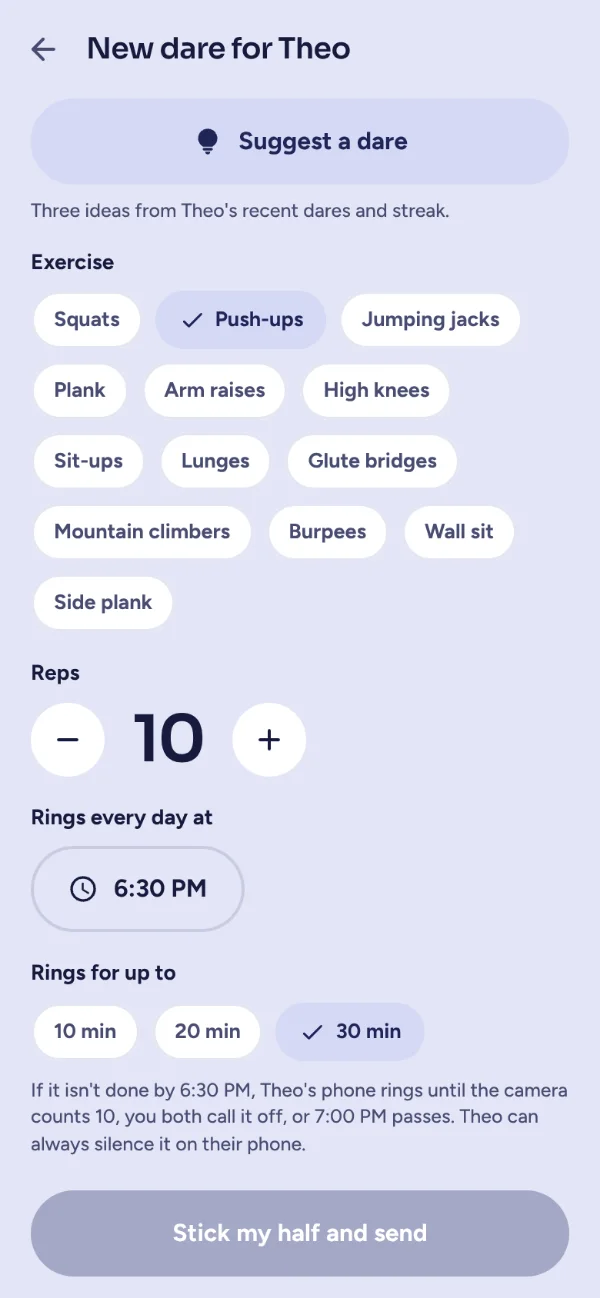
At that time, your partner's phone rings with a full-screen alarm, even over the lock screen. They open the camera, and it counts each rep live as they move. A rep with poor form doesn't count, and a short tip says why, like "Go lower". Nothing is recorded: no video or photo leaves the phone.
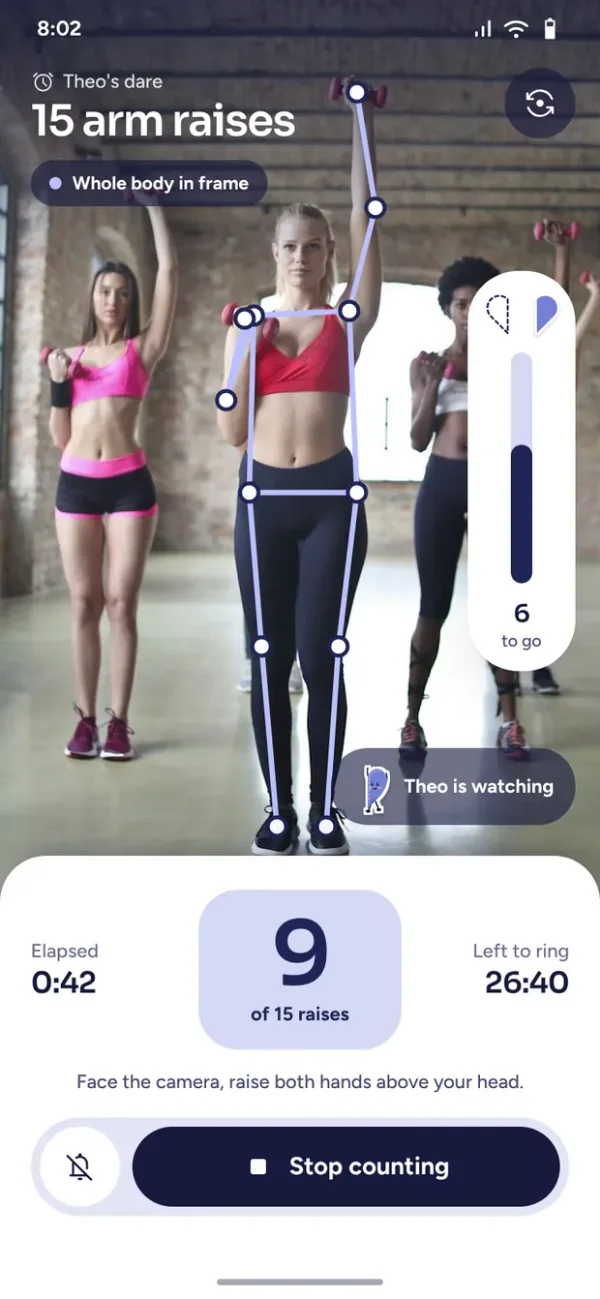
The kind way out is built in. Your partner can always silence the alarm on their own phone, or ask you to call the dare off with a note, and only you, as the setter, can say yes.
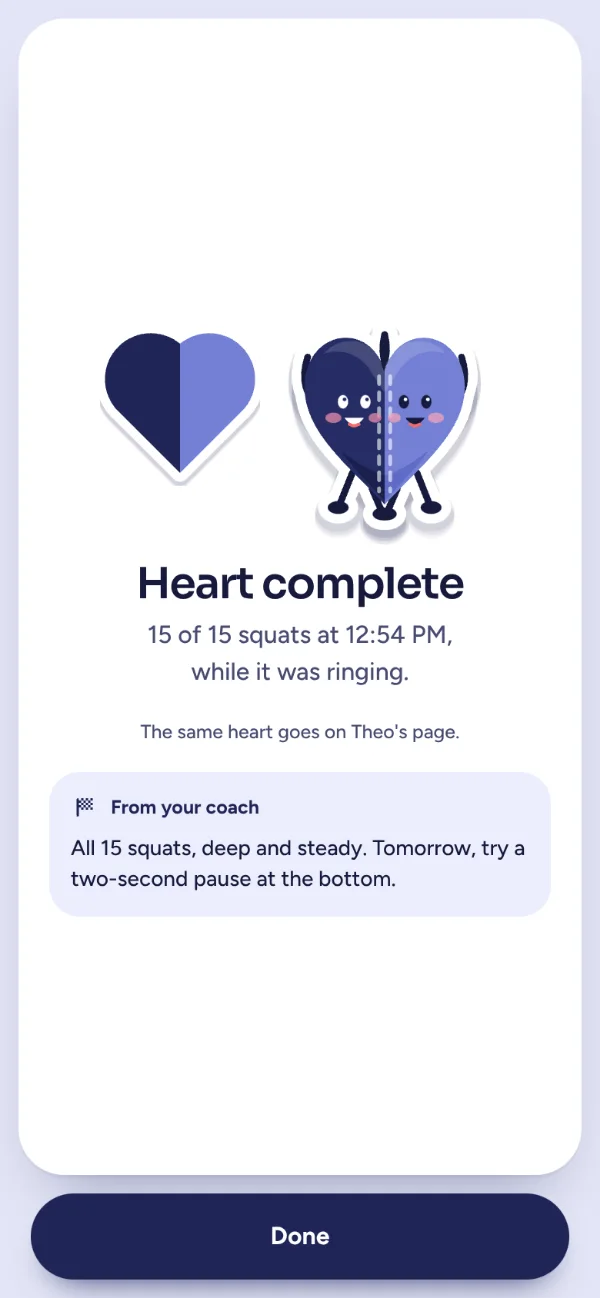
When you've both done your dare, each done dare is half a heart, and the two halves make a whole one. Streaks count the days in a row, so you can watch the month fill up.
If you miss a day
You will, probably. Here's how to keep going without guilt:
- Don't double up. Skip the missed day and carry on with today's.
- Swap, don't drop. On a tired day, do half the count or switch to an easier move.
- Extend the month. Missed three days? Finish on Day 33. Nobody is checking a calendar.
- Talk about it on the rest day, not in the moment. "What got in the way?" is a better question than "Why didn't you?"
If one of you is keener than the other, our piece on how to motivate your partner to exercise without nagging has gentle ways to keep it fun.
After Day 30
The best result of a month like this is the habit, not the numbers. Keep the same time of day and the same turn-taking, then pick one of these:
- Repeat the month with every count raised a little.
- Swap setters, so whoever set the odd days now sets the even days.
- Go longer once a week, with a short routine like our 20-minute couples workout at home.
Whatever you choose, keep the part that made it work: one small promise a day, chosen by your person, kept together.
Questions
Is a 30 day fitness challenge enough to see results?
It depends on where you start and what you count as a result. A month is long enough to build a daily habit and to notice moves feeling easier. Treat it as a start, not a finish, and keep going afterwards if it suits you both.
What if my partner and I are at different fitness levels?
Use the same move but different counts. The setter suggests a number, and each of you adjusts it to suit your body, so one might do 10 push-ups on their knees while the other does 15 full ones. You are doing the challenge together, not racing.
Do we need any equipment for this 30-day plan?
No. Every move in the plan uses only your body weight and a bit of floor or wall space. A mat or towel can make planks and sit-ups more comfortable, but it is optional.
Can we do the challenge if we live apart?
Yes. Agree a time that works in both time zones, share the table, and each do the day's move wherever you are. Sending a quick message when you are done keeps the shared feeling going.
Should we exercise on the rest days?
Only gently, if you want to. A walk or a light stretch is plenty, and doing nothing is fine too. Rest days give your body and your motivation time to recover before the next week.