 heartpact
How to motivate your partner to exercise without nagging
How to motivate your partner to exercise without nagging: invite instead of push, start tiny with a dare they agree to, and react kindly when they miss one.
If you're wondering how to motivate your partner to exercise, here is the short answer: stop reminding and start inviting. Ask what they would actually enjoy. Agree on one tiny thing together, at a time they pick. Do your own part alongside theirs, and when they miss a day, be kind about it.
Reminders feel like being watched. An invitation feels like being wanted. The rest of this post is about turning that idea into something the two of you can start this week, without anyone feeling judged.
Why reminders turn into nagging
Most reminders start with good intentions. You care about your partner, you've found something that makes you feel better, and you want that for them too. But "Did you go for that walk?" lands differently on the third day than it did on the first.
A few things happen when one person becomes the reminder:
- It becomes your goal, not theirs. Your partner is now exercising to stop you asking, which is a weak reason to keep going.
- You become the referee. Every missed day turns into a small moment of disappointment between you.
- It can sound like a comment on their body. Even if you never mean it that way, "you should move more" can be heard as "you should look different".
The fix isn't to care less. It's to change who owns the plan. If your partner helped design it, agreed to it and can change it, you're no longer pushing. You're keeping a promise together.
How to motivate your partner to exercise: invite, don't push
Ask what they actually want
Start with a conversation, not a plan. Pick a relaxed moment, not right after you've come back glowing from a run. Try questions like:
- "Is there anything you'd like to feel better at? Stairs, sleep, energy in the afternoon?"
- "What kind of moving have you ever enjoyed, even a little?"
- "Would it help if we did something together, or would you rather do your own thing?"
Listen more than you suggest. If the answer is "not right now", that is an answer. You can ask again in a few weeks, gently, without making it a project.
Let them choose the move and the time
People keep promises they made themselves. So let your partner choose the exercise and when it happens. Someone who hates mornings will not become a 6:00 person because you asked nicely. Someone who finds push-ups miserable might quite like a wall sit or a few jumping jacks while the kettle boils.
Do yours too
The quickest way to stop sounding like a coach is to be a teammate. If they agree to ten squats, you agree to something too. It doesn't have to be the same thing or the same size. It just has to be fair, so that you're both showing up, not one of you checking on the other.
If you'd like a fuller system for this, our guide to setting the rules with an accountability partner for fitness walks through agreeing on what counts, what happens on busy days and how to change the plan.
Start tiny: a dare they agreed to
A dare sounds dramatic, but the best ones are small. Think of it as a promise with a time attached: "15 squats at 18:30" or "a 30-second plank before bed". Small enough that saying yes is easy, specific enough that you both know when it's done.
Starting tiny matters for a reluctant partner. A big plan asks them to change who they are. A tiny one asks for two minutes. Once two minutes feels normal, growing it is their choice, not yours.
Here's one way to build up over a month. Treat it as a menu, not a rule, and let your partner set the pace.
| Week | Example dare | Roughly how long | Who decides to move up |
|---|---|---|---|
| 1 | 10 squats or 20 jumping jacks | under a minute | stays here unless they ask |
| 2 | 15 squats or a 20-second plank | about a minute | your partner |
| 3 | 10 lunges each side or a 30-second wall sit | one to two minutes | your partner |
| 4 | a short mix, such as 10 squats and 10 glute bridges | two to three minutes | both of you, together |
If you want ideas sorted by difficulty, there's a list of fitness dares for couples from easy to hard.
In Heartpact, one partner sets the other a dare: the exercise, the count or hold time, and the time it rings. The kindest way to use it is to set it together, sitting side by side, with your partner choosing the exercise and the time. On the free plan, you each get one daily dare, which is plenty for a tiny start.
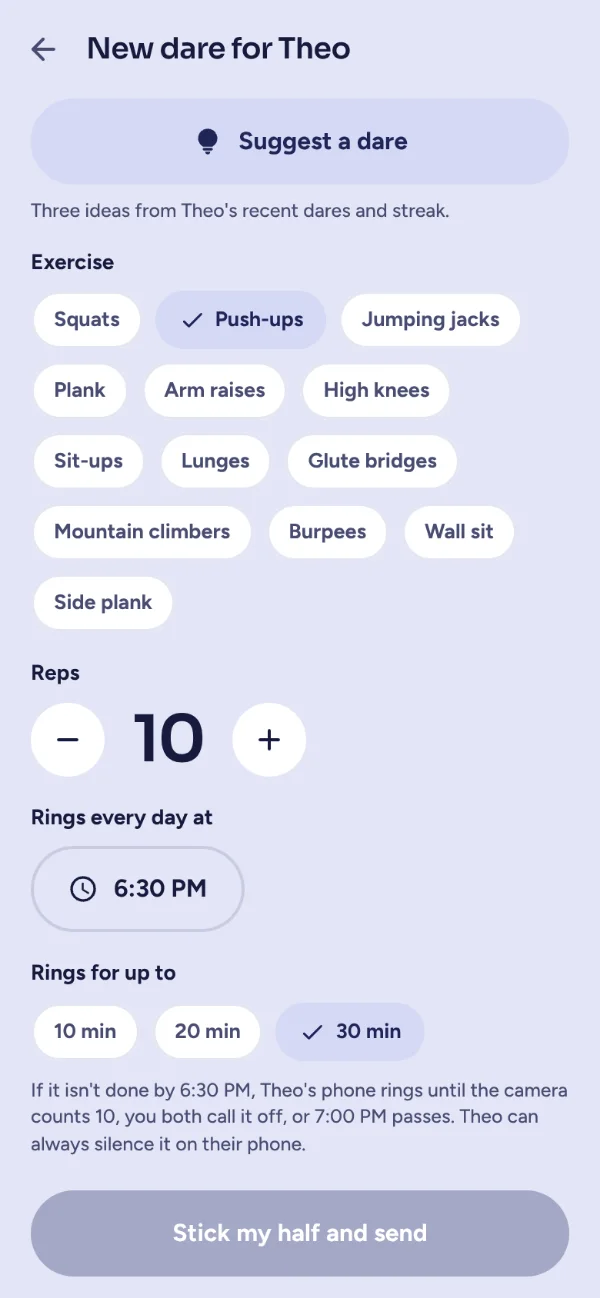
At the agreed time, their phone rings with a full-screen alarm, over the lock screen. That's the part that replaces your reminder: you don't have to ask, because the phone does. The alarm keeps going until the reps are done (the camera counts them live on the phone, and nothing is recorded), for up to 30 minutes, or until you both agree to end it.
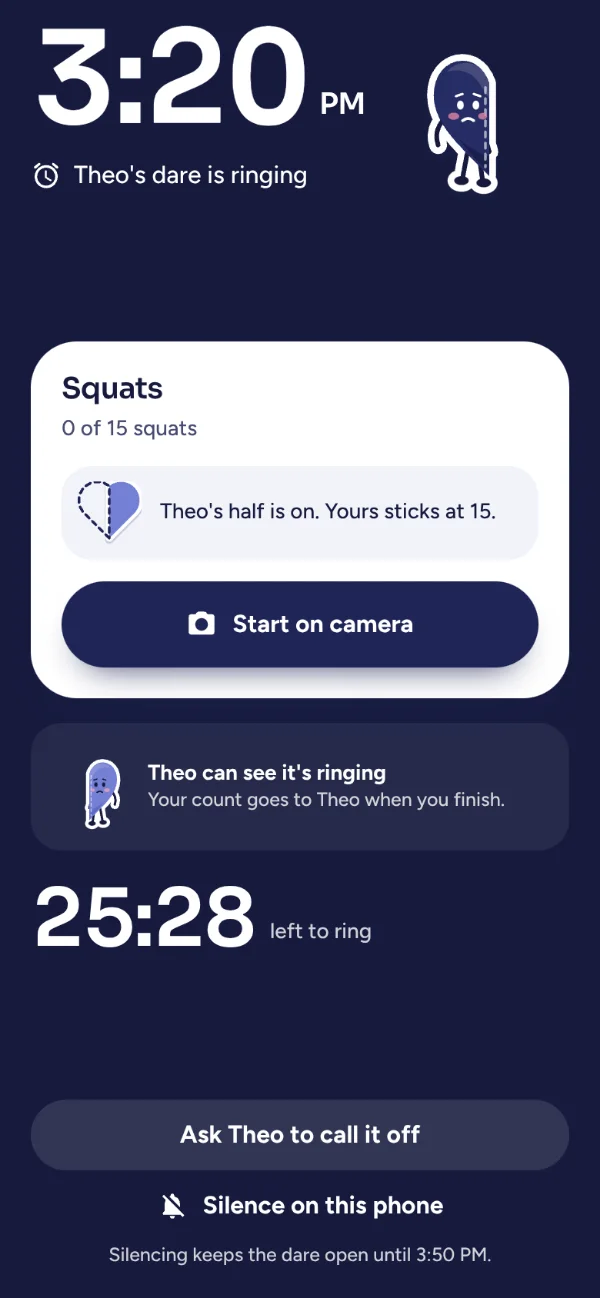
There is always a kind way out. Your partner can silence the alarm on their own phone at any time, or send you a note asking to call the dare off, and you can say yes. That matters: a dare is something you both agreed to, never a trap.
What to say when they miss one
This is the moment that decides whether the whole thing works. A missed dare is information, not a failure. Maybe the time was wrong, the move was too much, or the day was simply rough.
Things that help:
- "No worries, want to move it to a better time?" Fixes the plan instead of judging the person.
- "Was that one too much? We can make it smaller." Shrinking a dare is a smart move, not a step back.
- "I'll do mine and we'll try again tomorrow." Keeps you a teammate.
- Saying nothing at all. Sometimes the kindest response is just to carry on.
Things to avoid:
- Counting their misses out loud, or comparing your streak with theirs.
- Any comment about weight, size or how they look.
- Turning exercise into a penalty ("you skipped, so it's double tomorrow").
- Sighs, silences or jokes that are really complaints.
If they say yes to calling a dare off, say yes back, warmly. Trust grows every time a way out is actually respected.
Celebrate the days you both keep your word
Motivation lasts longer when the good days feel good. Notice them out loud: "You did it even though work was awful today" means more than any reminder ever could.
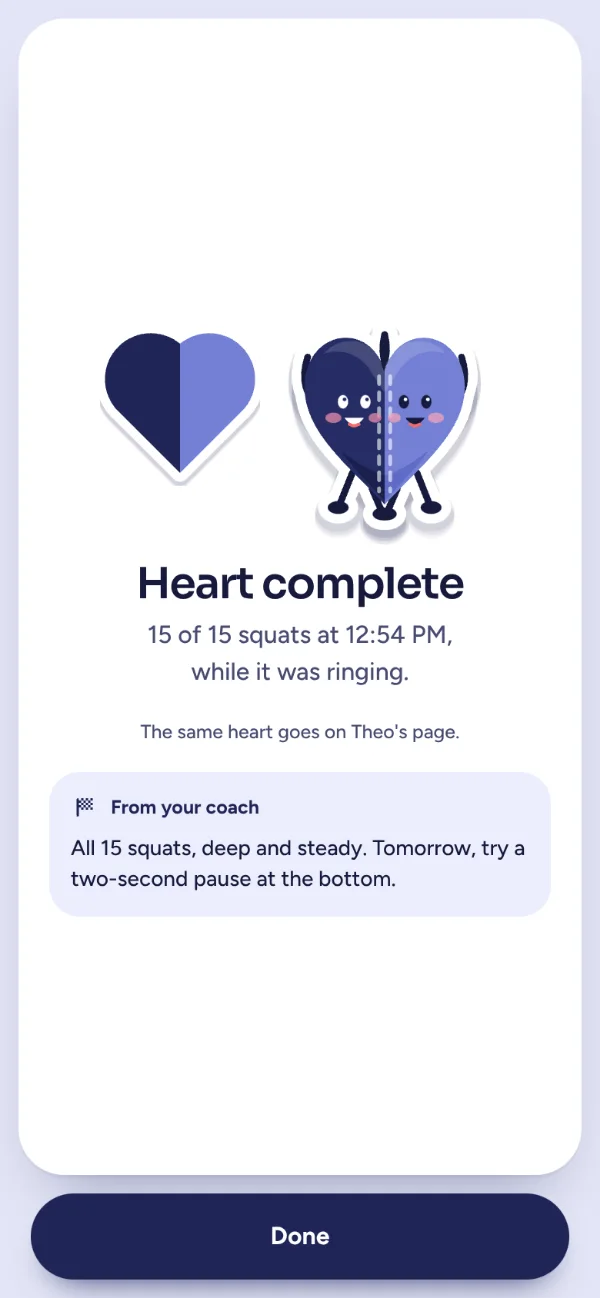
In Heartpact, each partner's finished dare is half a heart. When you both keep your word, the heart is whole, and it shows on both of your pages with a short coach's note. Streaks count the days in a row, but the point isn't the number. It's a small, shared sign that you both showed up.
A few other touches can make it feel like something the two of you share rather than homework:
- Watch live, if they're happy with that. The partner who set the dare can watch a stick figure of the movement and the count climbing, never the camera picture. Some people love being cheered on; others would rather be left alone. Ask.
- Lend them your voice. On Plus, you can record about a minute of yourself reading lines in the app, and your partner's coach then counts and cheers in your voice. It's only ever your own voice, and you can delete it any time.
- Learn the move together. Every exercise has a short how-to with a moving stick-figure demo, which helps if your partner feels unsure about form.
When the tiny dares feel easy, you might try a 20-minute couples workout at home with no equipment, but only if your partner wants to. Staying small for months is completely fine.
A few honest limits
Some reluctance has nothing to do with willpower. Your partner might be tired, stressed, unwell, in pain or dealing with something they haven't mentioned. If they have an injury, a health condition, are pregnant or have been ill, they should check with a doctor or other health professional before starting something new.
And sometimes the answer is simply no. Your partner gets to decide what they do with their own body. You can keep moving yourself, enjoy it visibly, and leave the invitation open. Often that does more than any plan.
Questions
How do I get my partner to exercise without nagging?
Hand them the plan. Ask what they'd enjoy, let them choose the exercise and the time, and agree on something tiny. When the reminder comes from a time they picked rather than from you, it stops feeling like nagging.
What if my partner doesn't want to exercise at all?
Respect it and leave the door open. Keep moving yourself, invite them now and then without pressure, and never comment on their body. If something like pain or tiredness is holding them back, a doctor or other health professional is the right person to talk to.
How small should a first exercise goal be?
Small enough that saying yes feels easy, such as 10 squats or a 20-second plank at a set time. The aim in the first week is the habit of showing up, not the workout. Your partner can choose to make it bigger later.
Should I exercise with my partner or let them do it alone?
Ask them. Some people love company and cheering, others prefer privacy. Either way, doing your own part at the same time keeps it fair and makes you a teammate rather than a supervisor.
What should I say when my partner skips a workout?
Something that fixes the plan, not the person, like offering to move it to a better time or make it smaller. Avoid counting misses, comparing streaks or turning exercise into a penalty. Then carry on with your own part and try again tomorrow.